About Me

My photo
Gqeberha, Eastern Cape, South Africa

Saturday, August 1, 2026

My kinderboek 'Skitterdinge en Skoeloeloe'

Waaroor gaan my boek 'Skitterdinge en Skoeloeloe'?
Zandi Kauapirura los alles wat sy ken in Windhoek en trek saam met haar ma na Suid-Afrika, 'n nuwe land, 'n nuwe dorp en 'n skool waar sy niemand ken nie. By Laerskool Bloemendal lag party kinders vir haar Herero-vlegels en haar "snaakse" Afrikaans, en die groot hekke voel vir haar soos tronkdeure.
Maar Zandi dra 'n koperarmband van Ouma Kovii, en saam daarmee die woorde ‘stories het mag’. Met die hulp van nuwe maats, Ayanda en Tommie, ontdek sy dat haar stories brûe kan bou waar mure gestaan het. Van Herero-erfstukke, stories en woestynsand tot Zoeloe-krale en Karoo-kristalle: elke kind bring sy eie skitterding skool toe.
'n Warm, kleurvolle storie oor identiteit en anders wees, oor trots op jou wortels en komvandaan, en ook oor die moed om jouself te wees wanneer 'n boelie jou wil verkleineer. Want dis juis ons verskillende kleure, kulture en stories wat die wêreld laat skitter, en 'n lekker skoeloeloe skoppery bring almal saam!

My boek is geskik vir Graad 4 Huistaal / Graad 5 Eerste Addisionele Taal, met gratis aflaaibare memorandum vir vrae wat agterin die boek verskyn.
Navrae hdeclercq@jbp.co.za of hviljoen@jbp.co.za https://www.nb.co.za/en/view-book/?id=9781776073207


Kreatiewe Beserings

Kreatiewe Beserings – Selwyn Milborrow

Ek dra al dekades lank die littekens van ’n kreatiewe besering. As ’n bruin seun in die laat tagtigs, midde-in apartheid, het ek op hoërskool geleer dat woorde wapens kan wees; hulle vorm persepsies, bou verhoudings, inspireer, breek af, en maak seer.

Op sestienjarige ouderdom het ek ’n opstel geskryf - ’n storie geïnspireer deur die boeke wat my wêreld was. Ek het die woorde soos bakstene gerangskik, elkeen met mekaar gebalanseer. Maar toe ek my opstel indien, het die onderwyser dit met rooi ink gemerk: “swak, verbeeldingloos!” Hy het nie eers my naam onthou nie. Net toe ek daarvan wou vergeet, het die voorligtingsonderwyser maande later my droom om skrywer te word uitgelag. Hy het almal in die klas gevra om beurtelings op te staan en ons toekomsdrome te deel. Sy aansteeklike lag vir my onmoontlike toekomsdroom het my klasmaats saam laat uitbars van die lag. Ek moes leer: my woorde is belaglik. My stem en my taal is bruin, onwaardig en dom. Terloops, die onderwysers was almal ook bruin! Dit het iets in my binneste seergemaak, geskroei, en beskadig.

Dit gaan natuurlik ook oor ‘emotional inheritance’. Die dinge wat ons onderwysers, ouers na ons toe oorgedra het. Die traumas waarvoor ons nooit gevra het nie, die respek en aanvaarding wat ons nooit ontvang het nie. My bruin Afrikaans by die huis het helsbreed verskil van die wit Afrikaans in die klaskamer. My ouers het my herinner om mooi Afrikaans te praat soos ek op skool leer. So, dit strek verder terug as net ‘n ervaring met ’n onderwyser of professor. My ouers, familie, kindervriende was karweiers van daardie ‘emotional inheritance’. Ons moet ons hele lewe konfronteer. Die kollektiewe geheue is kragtig!

Jare later het ek ’n naam daarvoor gevind: kreatiewe besering. Dit is in ’n brief wat Suleika Jaouad oor haar kreatiewe besering met lesers gedeel het. Sy het beskryf hoe kinders se verwondering deur volwassenheid vernietig word. Haar woorde het my diep getref, maar ook lig en verligting gebring. Dit was presies wat ek jare gelede ervaar het. Ek wou vir jare nie daardie vernedering op hoërskool met mense deel nie. Elke keer as ek ’n nuwe stuk wou begin, het ’n stem gefluister: "Hou dit vir jouself. Blootstelling beteken pyn."  


Soms moet die storms van die lewe eers oor ons spoel voordat ons werklik waardeer wat ons het - die gewone wonderwerke wat ons daagliks omring maar selde raaksien. Dit was die geval met my ma en die slrywer, Annelie Botes. Albei was wonderwerke in my daaglikse lewe. Ek kon hierdie twee reuse nie miskyk nie. My ma was ’n vrou wat ’n bobaas storieverteller was. Sy het my geleer om te skryf sonder vrees, om die vreugde van ’n storie te vier. Die skrywer, Annelie Botes het ook my talent as ’n storieverteller raakgesien. Ek het my woorde weggesteek totdat sy in my lewe verskyn het. Sy, my “wit antie,” was nie familie nie, maar het my raakgesien in ’n tyd toe ek myself onsigbaar gehou het. Sy was ’n skrywer met ’n reputasie, ’n vrou wat my hand gevat het en gesê het: “Kom, ons gaan jou storie opteken.” Sy het my figuurlik aan die “pen” gevat. Sy het my uit ’n donkerte gelei waar ek vir jare lank vasgekeer was. “Jy het ’n stem, Selwyntjie!” het sy gesê. “Moenie toelaat dat hulle jou skaam laat voel daarvoor nie.”

Met elke digbundel en boek herwin ek ’n stukkie van die kind wat kreatiewe beserings opgedoen het, wat geweet het: skepping is ’n daad van rebellie. My ma en my wit antie het seker gemaak dat ek dit onthou.

Jaouad is reg: kreatiwiteit en verwondering vergaan nooit heltemal nie. Hulle lê begrawe onder die littekens - geduldig, wag om opgegrawe te word. Tussen die kloof van pyn skemer die lig van heelwording. En so, met elke letter wat ek neerpen, eis ek iets terug: nie net vir die man en skrywer wat ek nou is nie, maar vir daardie seun wat geglo het sy stem tel nie.

Dan is daar ook die ironie! Dat dit ’n wit vrou was wat my aan die hand - of my pen - gevat het in hierdie heelwording van my kreatiewe beserings. Sy, wat self geen littekens van my stryd gedra het nie, het ’n persoonlike en kulturele brug geword. Dis dalk die grootste wonder van alles: dat genesing soms uit onverwagte oorde kom, en dat selfs in die skadu van onreg, die mensdom sy menslikheid en medemenslikheid kan wys.


Monday, July 20, 2026

My kinderboek Skitterdinge en Skoeloeloe: van Windhoek se rakke tot in Suid-Afrikaanse harte

 📚 Van Windhoek se rakke tot in Suid-Afrikaanse harte

Dit maak my hart vol om my boek Skitterdinge en Skoeloeloe op 'n boekrak in Namibië te sien staan. Die storie begin juis hier, in Windhoek, en beweeg dan saam met die hoofkarakter, Zandi, na Suid-Afrika toe.


Zandi is 'n jong Namibiese meisie wat saam met haar ma van Windhoek na Suid-Afrika verhuis. Sy worstel met vrae en angs: Hoe sal haar nuwe lewe lyk? Sal haar nuwe skool, omgewing en maats haar aanvaar? Sy twyfel aan haar identiteit en haar unieke Afrikaanse aksent, en wonder of dit haar dalk 'n buitestaander gaan maak. Haar ouma probeer haar gerusstel, maar diep binne bly die vrees vir wat voorlê.

Die boek raak temas aan waarmee leerders in graad 4 en 5 hulself maklik kan vereenselwig: stereotipering, identiteit, kultuur, boeliegedrag en die vrees vir verandering. Ek het die stories met begrip en deernis geskryf, sodat jong lesers oor empatie, aanvaarding en selfvertroue kan nadink.

Skitterdinge en Skoeloeloe is nie net 'n mooi storie nie. Dit is 'n leerervaring wat jong lesers aanmoedig om verskille te aanvaar en verandering te omhels.


#SkitterdingeEnSkoeloeloe #Afrikaans #Kinderboeke #Windhoek #Namibië #SuidAfrika #Graad4 #Graad5 #Lees #JonathanBallPublishers


Friday, July 18, 2025

Ons boek aan personeel en studente van Michigan State University by Nelson Mandela Universiteit oorhandig

Ons boek, ‘Madiba se Aanhalings en Staaltjies,’ ondersoek 27 kern-aanhalings van Nelson Mandela. Daar word ‘n verbintenis getrek tussen elke aanhaling en sy 27 jaar van gevangenskap, asook sy lewe daarna. Deur ons gesamentlike poësie en persoonlike kommentaar bied Bevan en ek ‘n dieper begrip van hierdie diepgaande uitsprake van Madiba.


Kopieë van ons boek, ‘Madiba's Quotes & Anecdotes’ is onlangs aan besoekende personeel en studente van Michigan State University by Nelson Mandela Universiteit oorhandig.


Friday, April 25, 2025

My Master's Degree honouring poet, Clinton V. du Plessis

I recently celebrated the conferral of my Master of Arts degree in Afrikaans and Dutch at Nelson Mandela University's Autumn Graduation 25. My thesis, titled "Themes and trends in the poetry of Clinton V. du Plessis," offers the first in-depth academic study of Du Plessis’s extensive body of work. Spanning over four decades, his poetry has long remained on the periphery of scholarly attention - until now.

Du Plessis, an acclaimed poet whose work has historically occupied a position on the periphery of the Afrikaans literary canon, was present for the awarding of my degree. I had the honour of presenting Du Plessis with a bound copy of my completed thesis - symbolising the convergence of primary creative work and critical scholarship.


My research makes a substantial contribution to the field of contemporary Afrikaans literary studies through its systematic identification and analysis of dominant thematic concerns and stylistic characteristics in Du Plessis's poetry. The study particularly focuses on the representation of marginalized figures, racial discourse, working-class experiences, distinctive language usage, concepts of transience, and intertextual relationships - elements that have defined Du Plessis's unique literary voice.

The scholarly significance of my research extends beyond the completion of degree requirements, addressing a notable lacuna in the critical examination of poets on the fringes of the literary canon. By methodically investigating an important yet previously under-researched corpus of work, my thesis enhances our understanding of the sociocultural dimensions of contemporary Afrikaans poetry.

I am profoundly grateful to my supervisor, Professor Marius Crous, whose intellectual mentorship and exceptional guidance were instrumental throughout my research process. I also wish to express my appreciation to my co-supervisor, Dr. Stefan van Zyl, for providing rigorous feedback and constructive criticism that facilitated both my scholarly advancement and personal intellectual development during this research journey.

I extend my heartfelt thanks to Clinton V. du Plessis for his generosity in granting me access to his work and for his gracious support throughout my research. His poetry continues to challenge, move, and inspire - and it was an honour to engage with it so closely.


Monday, January 15, 2024

My childhood days during the Christmas season on my grandparents' farm in Alexandria

 Whenever I hear a song or experience the smell of farm food, it feels like I’m being transported back to my childhood days on a farmhouse in Alexandria. All my cherished memories are entwined in every fibre of my grandparents’ farm, Little Barnet. It is where my mom grew up. It’s just amazing how specific experiences have the power to shape us for a lifetime. As I take a moment to reflect on my childhood, I find myself transported back to the late 1970s, when life moved at a slow pace. I remember being surrounded by the beauty of nature and the idyllic Eastern Cape countryside.

My mom loved sharing stories of how all the children had to do chores. She and her brother Andrew were tasked with morning chores: The rooster's crow at the crack of dawn, signalled the start of a new day on the farm. They made their way to the barn, where the cows eagerly awaited their morning milking. Winter mornings were challenging, but that was life on the farm.

In the heart of Little Barnet Farm, where time seemed to weave itself into the very fabric of the farm, the Christmas holidays were more than a season; it was a living, breathing family fairytale. The Christmas holidays unfolded like a cherished story passed down through generations. The Alexandria exodus to Jan and Annie Wentzel’s farm brought together generations of Wentzels, Marees, Milborrows, Camfers and Oosthuizens; a symphony of laughter, and the warmth of family embracing the farm’s landscape. Memories etched in time, a tapestry of moments woven by cousins, uncles, and aunts, their youthful spirits dancing through the fields.

 The great migration to Alexandria to embrace the haven of Jan and Annie Wentzel's farm orchestrated a magnificent reunion of the Wentzel, Maree, Milborrow, Camfer, Oosthuizen, Jacobs clans. Together, we formed a harmonious symphony, a rich tapestry of shared laughter and familial warmth, woven into the majestic fabric of the farm's landscape. Time stood still as memories were etched into the soul of our collective existence, a vibrant canvas painted by the spirited dance of children through the sun-kissed fields.

Cousins, whose names resonated like a melodious hymn - Donald, Neil, Crystal, Chantel, Sharon, Mercia, Heather, Derrick, Peter, Pascoe, Rodwell, Marius, Edgar, Gravin, Selwyn, and Cre - darted gracefully through the grass. We, the painters of joy, let our carefree spirits waltz through the landscape, leaving behind strokes of vibrant and playful hues. The rustling leaves above conducted a soothing melody, guiding us through a labyrinth of hidden wonders. Secret spots emerged, forts made from fallen branches, and the cows' grazing ground transformed into an expansive playground for our boundless imaginations.

Under the shade of lemon and apple trees, we sought refuge from the scorching sun. The cows and sheep, unwitting participants in our youthful antics, bore witness to the laughter of boys chasing tadpoles in animal water holes and catching frogs hiding behind stones. Grandpa's horse, Whiskey, stood as a silent sentinel, enduring a cascade of stones as tokens of our mischievous play. The occasional hiding from Grandpa's loving yet stern hand became threads seamlessly woven into the canvas of our innocence.

Aunty Margie and Ma Eva regaled us with tales that carried the weight of shared history, tickling our funny bones. Sharon, Mercia, and a tiny Heather indulged in feasts that left bellies aching but hearts yearning for more. Natasha, Clinton, Keith, and Clyde navigated the intricate dance of hide-and-seek, their father's scolding first met with fear and later with peals of laughter that resonated across the farm.

Each morning greeted us with the gentle rise of the Eastern Cape sun and the crowing of cockerels, signaling the beginning of another beautiful day. With excitement bubbling in our steps, we ventured outside, eager to greet cousins and embark on amazing adventures on the farm. We played until it became dark, just in time for supper. There were no fears for the safety of the children. It was a safe world back then. The farm, a sanctuary of shared history and enduring love, became the canvas on which our stories were painted, a masterpiece woven with threads of laughter, mischief, and the unbreakable bonds of family. Fruit plucked from trees, pure cow milk, hearty meals, and candies like lekker-smekka became sweet memories, laying the foundation of our shared past.

Lunches seasoned with spices and herbs from Grandma's herb garden formed a culinary mosaic, speaking the language of love with every bite. Simple pleasures, like coffee, eggs, and buttered toast, became cherished rituals. Picnics, a timeless tradition, still held sway on the farm, with Grandpa reclining under his tree, relishing the shade and watching the joyful spectacle of his grandchildren playing.

The farm echoed with the laughter of generations, and the kitchen became a sanctuary of heavenly flavours. Another highlight was visits to Galiema and Koos, whose food became a sought-after delicacy in the tapestry of the holidays. Walks through the woods, close calls with snakes, harmonious melodies, Sunday church hymns, and stories in the lounge painted a tapestry of timeless memories.

All good things come to an end. My dad used to utter those words that a child don't want to hear. It was the case on the farm when we entered the last day of the year. Now, as Aunty Margie, Aunty Suzie joined aunty Mimmie, and her sister Eva in the celestial tapestry, I can't help but envision the festive gatherings that must be taking place in Heaven. Ma Eva, mother, grandmother, great-grandmother, the timeless storyteller and caregiver, continues weaving her tales, her laughter harmonising with that of Aunty Margie's, and the celestial melodies played by Aunty Suzie on her heavenly harp. Little Barnet Farm, forever a sanctuary of cherished memories, remains a haven where the spirits of loved ones persist in their dance, and the echoes of joy reverberate across the fields of eternity. The legacy of those holidays, eternally cherished, carries on in the boundless expanse of familial love and shared history.

The memories woven on Little Barnet will forever have a sacred place in my heart. They are the threads that have intricately shaped the very essence of who I am today - a person attuned to nature's wonders, one who cherishes the profound bonds of family above all else, and finds joy in life's simplest pleasures. When the weight of the loss of a beloved family member becomes too much to bear, I seek solace by closing my eyes, allowing the currents of memory to carry me back to Little Barnet, where the symphony of laughter, rustling leaves, and the comforting presence of family formed an eternal melody. In those hushed moments of reflection, the farmhouse becomes a poignant portal, unlocking the treasured adventures of my childhood, forever resonating with the echoes of laughter and the warmth of days gone by.

Life, in its tumultuous nature, often feels overwhelming, yet I find solace in holding onto the precious memories of my childhood days on Grandpa's farm. On a lazy, sleepy afternoon, with the cows contentedly grazing, I shared a few secrets with them as they merrily chewed on grass. These memories serve as my compass through the chaos, keeping me grounded and offering a timeless tribute to my grandparents, parents, aunts, uncles, cousins, and even the farm animals.

The heart of Little Barnet will forever be cherished, its tales of family, love, and happiness embedded in my soul. On this day of celebration and reflection, I express my gratitude for the light my mom ignited in my life. We used to share stories about the farm and reminisce about the memorable holidays spent with family. Oh, how I miss the farm - perhaps it's the innocence of life that I truly yearn for. However, this Christmas is tinged with a profound ache as I deeply miss my mom. Her absence is felt in an indescribable way.

It is my sincere hope that this story serves as a beacon of light for anyone faced with an empty chair or two at the family table today. God bless you all!

Remembering Uncle Billy Jacobs

 Remembering Uncle Billy Jacobs: The sun has almost set below the horizon, casting long shadows across the yard as the news of Uncle Billy's passing came through. My first thought was that he was a man larger than life. Uncle Billy, despite his short stature, was a giant in life. He loved saying all his names when introducing himself: "I am William Salter Milborrow Jacobs." He was a family man and full of pride. From the earliest memories of my childhood, I can recall his booming voice and unyielding opinions that would fill our home whenever he came to visit. A "speak your mind" man, I called him, and he lived up to that moniker with every fibre of his being. He once said that a human being that doesn’t love music doesn’t believe in God. He loved listening to “Down memory lane” presented by Jill Stewart on Radio Algoa. I think he even went to the extend of meeting her.

When Uncle Billy visited us, it was a signal for a night filled with the vibrant tunes of Elvis Presley and Roy Orbison. I, a devoted Elvis fan, and Uncle Billy, a staunch supporter of Orbison, would engage in passionate debates about who was the superior singer. He used to take us on drives in his beloved yellow Chevair playing his favourite singer’s music. He also loved the music of Little Richard and The Platters. When it came to Elvis Presley and Roy Orbison, we agreed to disagree on which singer could sing the highest and hold the longest note. These debates would stretch into the late hours of the night, echoing through the night as we defended our chosen musical icons.

There were times when Uncle Billy would leave our home in the early morning hours, his voice lingering in the air long after his departure. One unforgettable morning, the laughter turned to astonishment as he discovered that mischievous thieves had removed his yellow Chevy’s windscreen. We were shocked at first, but the absurdity of the situation soon had us all in stitches. It became a family joke, a testament to the undeniable bond between Uncle Billy and our family - a bond forged in our shared love for music.

"That's just proof of how much I love music," Uncle Billy would chuckle, shaking his head in disbelief as he rubbed his chin. And so, the missing windscreen became a symbol, a quirky testament to the lengths we would go for the melodies that fed our souls.

I cherished my role as the Saturday afternoon DJ during Uncle Billy's visits. The living room transformed into a dance floor, and the melodies of Rock 'n Roll filled the air. My mother and Uncle Billy were dance partners since their childhood days in Alexandria. They would dance with the uninhibited joy of youth, captivating the eyes of us, the wide-eyed children who gathered to witness their lively performances.

In those moments, Uncle Billy wasn't just my uncle; he was the "man in black," a real-life Roy Orbison, and I was a youthful Elvis Presley. My father liked to call him “Billy, the kid”. He commanded the room with an energy that transcended the physical constraints of his stature. As the records spun and the dance floor pulsed with life, Uncle Billy became a beacon of exuberance, a reminder that the spirit of rock and roll could defy the passage of time.

My mother passed on last year. I remember his eulogy for my mom. Now, as we face a world without Uncle Billy, his absence leaves a void that seems difficult to fill. He joins his dancing partner in Heaven. I can imagine my mom exclaiming “What, look who came through the gates just now, none other than Billy, my dancing partner!” The music will play on and the melodies will carry the bittersweet notes of loss. Yet, as I reflected on the days filled with laughter, debates, and impromptu dance parties, I couldn't help but smile. Uncle Billy may have left this world, but the echoes of his vibrant spirit would forever resonate in the tunes that bonded us, making every note a cherished memory of a man who lived life with the audacity of a rock and roll anthem. Rock on, Oom Billy!

Wednesday, December 27, 2023

Aspekte van kwesbaarheid in die poësie van Vincent Oliphant

Aspekte van kwesbaarheid in die poësie van Vincent Oliphant – deur Selwyn Milborrow

Hierdie referaat ondersoek verskeie aspekte van kwesbaarheid in die gedigte van die Afrikaanse digter, Vincent Oliphant. Alhoewel sy debuutbundel, Bloed vloei in stilte (1983), en Die sagte vlees (1998) positief ontvang is, het sy werk tot dusver min akademiese belangstelling geniet. Hierdie studie beoog om ‘n dieper insig te bied in die wyse waarop Oliphant kwesbaarheid verweef in sy poëtiese uitinge om sodoende ‘n bydrae te maak tot die akademiese erkenning van sy werk.

Die temas van familie, liefde, verganklikheid, ouderdom, persoonlike verlies, en dood vorm ‘n herhalende patroon in Oliphant se gedigte. Hierdie temas word bespreek deur ‘n stiplees van geselekteerde gedigte uit sy bundels Bloed vloei in stilte (1983), Die sagte vlees (1998), Poësiepalet (2002), en Drieluik (2007). Hy besit die vermoë om na die onmiddellike wêreld om hom te luister en hierdie waarnemings in konfessionele poësie te omskep. Volgens Galvin (2019) spreek die digter op ‘n sekere manier om dinge nader aan die leser te bring:

The poet speaks in a particular way that can “bring things to nearness”. This particular way of bringing things to nearness may have some useful implications for understanding human well-being.

Die mens is vanaf geboorte kwesbaar, hetsy vir siekte of situasies wat ‘n ernstige bedreiging vir sy oorlewing inhou. Dit is daarom nie ‘n keuse nie, maar ‘n alomteenwoordige onderstroom van die mens se natuurlike toestand. Die Cambridge Dictionary (2022) omskryf kwesbaarheid as die kwaliteit om kwesbaar te wees; maklik beseer of aangeval te kan word. Die tema van kwesbaarheid in Oliphant se gedigte word vervolgens ondersoek ten opsigte van die mens se verganklikheid, veroudering, familie en die liefde. Gregory (2017) meen die begrip van broosheid in verband met die mens, is ‘n metafoor wat menslike beperkings in die liggaam of verstand erken. Oliphant se poësie stel gevolglik die leser in staat om op vernuwende wyse met sy eie, of andere se kwesbaarheid in verbinding te bring. Hierdie aspekte strek oor gemeenskaplike, sosiopolitieke en filosofiese aspekte van die lewe. Dit sluit aan by Anker  (2008):

Die onttakeling van die algehele en allesomvattende strukturering van die self het ten doel om die mens in verbinding te bring met die radikale kompleksiteit wat die lewe, die wêreld en die self, in werklikheid is.

Hambidge (1998) skryf die volgende oor hierdie aspek van sy digkuns:

‘n Mens [is] deurentyd bewus van ‘n gevoelige blik op alles. Dis asof sy pen ‘n hommeltuig bekom wat alles vanuit die hoogtes fynkam. Die digter verhul homself snags tussen ‘gevoelige lakens’ want hy weet dat elke dag nog ‘n waarneming sal opeis.

In Die sagte vlees (Oliphant, 1998:9) gebruik hy die mens se lippe om die liggaam se kwesbaarheid te beskryf: “delikaat krul die fyn soenlyn van die lip/ na buite/ om te getuig/ van die teer binneste.” Die brose stemming word beklemtoon deur woorde soos “sag”, “dun”, “allersagste”, “delikaat”, “teer”, en “naakgeklee”. Die liggaam se kwesbaarheid word deur middel van kontraste in die volgende verse uitgebeeld:

sag is die vlees

in ‘n dun vel naakgeklee

op wag

hoog in sy toring van brokkelbare been

is die allersagste oog 

Scholtz (1999:132) brei so uit oor gedigte uit Die sagte vlees:

Die gedigte handel oor die intieme verrukkings maar ook ontreddering waaraan die brose maar ook kwesbare vlees die mens blootstel.

Oliphant beskryf op subtiele wyse die natuurlike aftakeling van die liggaam en die oorgang van lewe na dood. In die gedig “‘n Vigslyer sterf” (2002:23), delf hy in die menslike psige en disintegrasie van die liggaam as gevolg van siekte. Die leser is ontbloot aan die ontstellende realiteit van ‘n sterwende MIV/Vigslyer. Die siekte het sy lyf tot so ‘n mate laat krimp, dat dit nou “klein en seer” is. Hoe meer sy liggaam krimp, hoe moeiliker raak dit om normaal te funksioneer:

die lyf

nou klein en seer

het byna alles reeds verleer

Die verskrikking in sy oë is ‘n finale besef van die liggaam wat besig is om te disintegreer. Teen die einde soek die vigslyer “raad teen al die skade”, en vra hy vir die “genade van sag gaan”:

net die oë bly groter staar

soek na raad teen al die skade

na die genade van sag gaan

na verstaan

Oliphant gebruik temas van die verbygaan van tyd en veroudering effektief in “’n Minnaar bepeins sy veroudering” (1998:49). Die ouer wordende minnaar word al meer bewus van sy swak gesondheid en die naderende dood:

die bloed sal eendag stadiger deur die are pols

die hart wat nou nog wulps galop

al hoe hortender klop

Hierdie bewuswording van die disintegrasie van die liggaam, en die magteloosheid teen die dood, herinner sterk aan Krog (2022:26) se gedig “Dis wanneer ons agterkom” uit Plunder:

maar ja, die vingernaels van die tyd is in ons ingewande

ons sit skielik in die koorskamers van vreeslike siektes

dis die tyd van kanker, alzheimers en parkinsons

ons speur aanhoudend binnetoe na die Groot Teken. 

Dit herinner ook sterk aan die laatwerk van Clinton V. du Plessis. In die laaste strofe van “Lamentasie vir die ou protesdigter” (2017:32), beskryf hy die mens se magteloosheid teen die dood:

Weet dan net nou:

hiérdie bestel kan jy nie omverwerp nie;

die dood is ‘n swaargewapende ewigdurende diktatuur

en jou verset daarteen is van korte duur.

Daar is ‘n finale berusting by die minnaar dat ongeag die liggaam se kwesbaarheid, hy daaraan gewoond moet raak. Daar is deurentyd ‘n naakte veraanskouliking van veroudering, so asof hy ‘n poëtiese x-straal daarvan neem:

die oë sal dof word

die ore doof

die kop sal verander in ‘n haarlose dop

Die temas van liefde en kwesbaarheid word op sober wyse saamgeweef in “Verliefdes” (1998:50). Die leser kry insig in die kwesbaarheid van die verliefdes se verhouding:

kyk hoe leun hulle teen mekaar

hulle glo hulle is raar

en besef nie dis ‘n eeue-oue verhaal

Daar is ‘n geïmpliseerdheid dat die liefdesband nie só sterk is as wat die verliefdes wil glo nie. Die spreker kyk objektief na die verliefdes wat in die onbreekbaarheid van hul liefde glo:

daar is ‘n sekerheid wat hulle uitstraal

asof ‘n magiese krag hulle omgewe

‘n mag wat vir alles sorg

wat hierdie liefde sal waarborg

vir die res van hulle lewe ongeag

Basson (1995) skryf die volgende oor liefdesverhoudings:

‘n Liefdesverhouding is dikwels ‘n geval van verwondering wat oorgaan in verwonding en sodoende aanleiding gee tot “the poetry is in the pity”.

Vir die spreker is die liefde verganklik, en sluit hy aan by Vermaas (1993) se mening:

Liefde is deel van ‘n verganklike aardse bestaan en word eerder ‘n middel om te ontsnap na ‘n “ander wêreld”. Die liefde word deel van ‘n fantasie en dekadensie.

Vir die spreker is die liefde nie in staat om die kwesbares binne die liefdesverhouding te red nie. Ten beste bied dit tydelike skuiling. Dit is egter hier waar die ironie na vore tree. Swenson (2004) skryf só hieroor:

Somehow, we just can’t wrap our minds around this idea of love. We can’t nail it down and say, “There, I’ve got you.” Yes, love is strange. It is weak yet tough, vulnerable yet strong.

Die spreker sluit af met ‘n verdoemende observasie:

hulle glo dit is ‘n onbreekbare band wat hulle bind

en weet nie dis iets wat fyner is

en verwikkelder

as rag

Oliphant se gedig “Breek” (2007:7) belig die tema van mishandeling en kwesbaarheid binne die huwelik. Die spreker skets dit as ‘n plek waarin die mens steeds kwesbaar bly as gevolg van ‘n eksistensiële bedreiging soos fisiese mishandeling. Die man se aggressie teenoor sy vrou word in die eerste strofe vergelyk met die afbreek van ‘n huis:

hy versplinter haar vensters

breek haar deure af

slaan stene uit

Die voorstelling van die kwesbare vrou as “die huis”, word verder versterk deur die ontstellende verwysing na die “ruïne van haar lyf”:

kyk verstom

na hoe die ruïne van haar lyf

op die grond bly lê

verstom na die blare van sy hande

wat pas hamers was

Die hande wat eens “blare” was, word opeens “hamers” in die geweldadige aanval op sy vrou. Die woorde “ruïne” en “hamers” impliseer dat die skade só groot is dat dit haas op vernietiging neerkom. Hy toon egter berou deurdat hy “bieg”:

in wie se lyf hy nes

in wie se boesem hy bieg

‘n Treffende voorbeeld van kwesbaarheid is wanneer die jammerte uit die man se lyf ruk. Ironies genoeg vergewe sy vrou hom onvoorwaardelik omdat sy dit as haar plig beskou:

maar as die jammer uit sy lyf ruk

is dit sy wat hom aan haar boesem druk

haar gebreekte hande voor hom hou

sy is sy vróu

Die paartjie se huwelik bly steeds kwesbaar as gevolg van ‘n voortgesette ontkenning, manipulasie en intimidasie. Die slotsom is dat die atmosfeer in die huwelik uiters gespanne bly, en enige oomblik soos ‘n bord na die vloer sal val en in stukke breek:

terwyl hulle wag

en nie durf weet nie

hoe hulle wag

op wat van hulle gaan word

op die oomblik wat gaan val

soos ‘n bord

Volgens Basson (1995) dui die bloed in Bloed vloei in stilte waarskynlik op leed wat in stilte verduur word. ‘n Motivering hiervoor kom voor in “In stilte” (1983:21):

En as ek eendag seer sou kry

moenie huil nie…

die bloed is altyd daar

die bloed vloei in stilte.

In bogenoemde bundel verskyn seker een van Oliphant se mees persoonlike gedigte, “Elegie vir die pianis” (1983:7). Hy skryf oor die skielike dood van sy broer in ‘n motorongeluk. Die openingsstrofe tref diep:

In die voorkamer staan die blink klavier

verslae

soos ‘n mond wat sy tong verloor het

Die gebruik van die relatief verhewe term “pianis” in plaas van ‘n meer beskeie beskrywing soos “klavierspeler”, dui daarop dat die musikant se vaardigheid hoog aangeslaan was. Die personifikasie in die eerste strofe, “soos ‘n mond wat sy tong verloor het” dui op hoe nouliks die instrument aan die speler verwant was. Daar ironie tref diep wanneer die musikant wat eens “een” met die “blink klavier” was, se vlees dodelik “verstrengel raak met metaal”:

Maar hoe was dit vir jou ou broer

toe jou vlees verstrengel raak met metaal?

Die verwysing na “gelag” en “geratel van teekoppies”, beeld uit hoe die ligte atmosfeer eensklaps in donkerte gedompel word. Die “vergeefse vertroosting van ‘n vader” beklemtoon die familie se magteloosheid teenoor die dood:

nou kan die telefoon enige gelag

of geratel van teekoppies

aan skerwe slaan

tot die histeriese geween van vroue

die vergeefse vertroostinge van ‘n vader

Die kwesbaarheid van die lewe breek aan wanneer die spreker sy broer se lyk moes uitken:

En nou?

ek wou nie glo nie

tot die dag in die lykhuis

toe ek finaal moes staar

na die gate in die hande van vreugde

Hierdie navorsing beklemtoon die wyse waarop Oliphant se fyn waarnemingsvermoë, diep empatie, en poëtiese oeuvre ‘n betekenisvolle bydrae lewer tot die literêre landskap. Sy gedigte nodig die leser uit tot ‘n sensitiewe en bedagsame beskouing van die menslike ervaring, waar kwesbaarheid nie slegs erken, maar ook omhels word as ‘n inherente deel van ons gedeelde bestaan. In Oliphant se woorde weerklink die kwesbaarheid van die mens as ‘n kragtige en transformerende stem, wat ons aanmoedig om die dieptes van ons eie menslikheid te ontgin.


Tuesday, December 26, 2023

Academic, 55, shows age is just a number!

Academic, 55, shows age is just a number!

The Herald (South Africa), 24 Apr 2023, Roslyn Baatjies

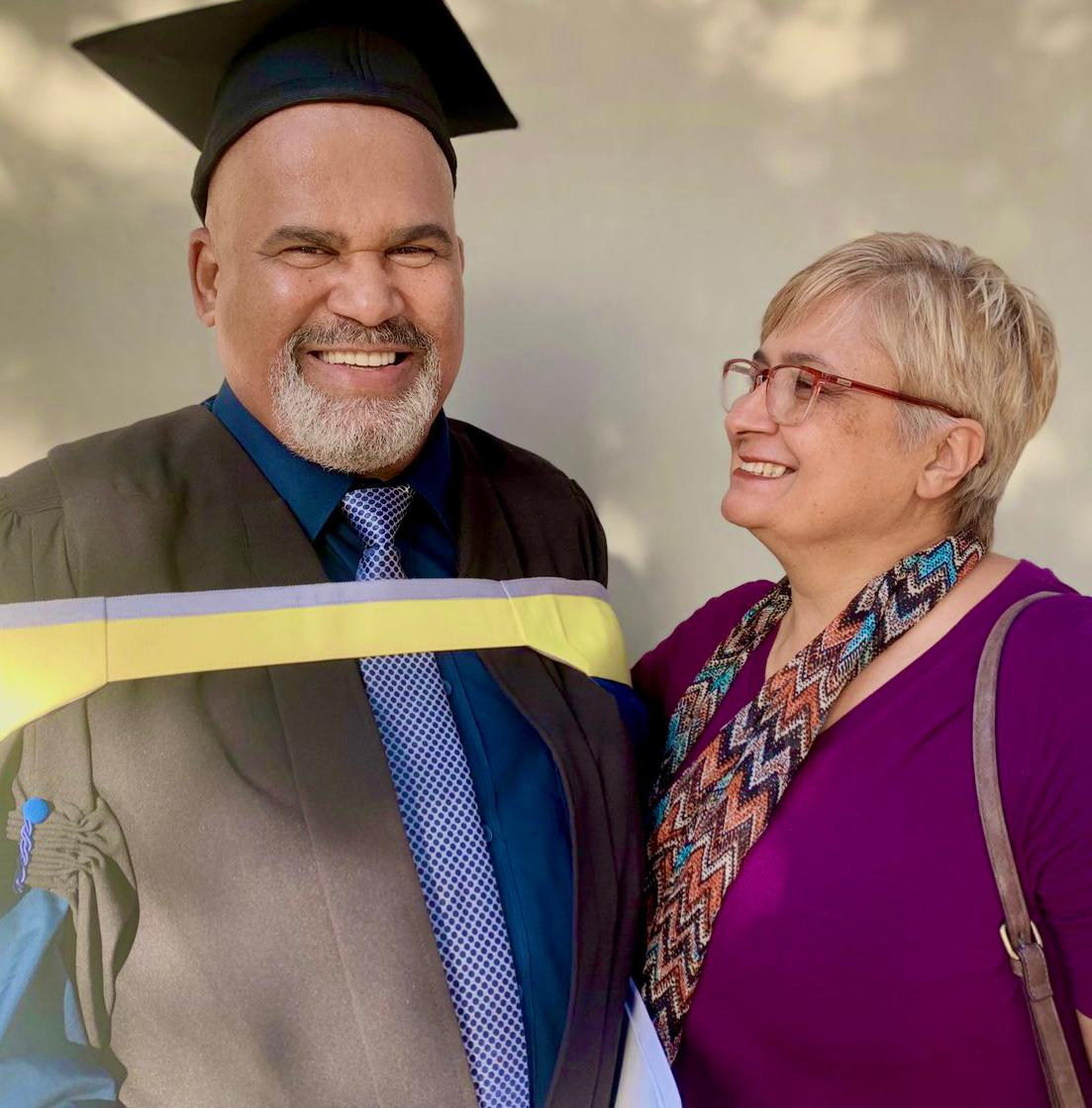
LOOK OF LOVE: Selwyn Milborrow and his wife, Sharon Liberty

Gqeberha poet and author Selwyn Milborrow is the embodiment of the belief that it is never too late to pursue your dreams. He started his studies in 2019 at the age of 52 and received his BA (general) degree in 2021. Last week, he graduated from Nelson Mandela University with an honours degree in Afrikaans and Dutch. And the journey does not end there, because he is now pursuing his master’s degree.

The 55-year-old university admin co-ordinator’s story is a powerful reminder that age is not a barrier to learning and personal growth. Despite initial concerns about his ability to keep up with younger students, he persevered and found that his life experience and maturity gave him a unique perspective and a valuable advantage in the lecture hall.

As a student who is decades older than my peers and old enough to be their parent, my experience in the classroom has been both challenging and rewarding.,” he said. Initially, I felt intimidated by the age gap, but I quickly realised that being surrounded by younger students is an opportunity to learn from them and gain fresh perspectives. As someone who considers myself to be ‘ old school’, I sometimes find myself stuck in my ways. However, being around younger students has helped me to stay current and openminded. It’s fascinating to see how they approach problems and come up with innovative solutions that I might not have considered. ”

Milborrow's academic pursuits were not without challenges as he was diagnosed with ulcerative colitis, an autoimmune disease which affects the colon. His illness not only strengthened his resolve to continue pursuing his academic dreams, but also gave him a new perspective on life. I realised that every moment should be cherished, and I refused to let my illness defeat me, ” he said.

“With the love and support of my wife, Sharon Liberty, I underwent two operations that saved my life. I was able to pursue my academic dreams. My story has touched the hearts of many and serves as a reminder that with determination and perseverance, anything is possible. My illness has also taught me a lot about perseverance. There were times when I felt like giving up, but I had to find the strength to keep going, even when it seemed impossible. This kind of perseverance is inspiring and can serve as an example to others facing their own challenges.”

His inspiring journey serves as a testament to the power of love and determination in the face of adversity. In a Facebook post, Liberty wrote about her husband’s achievements. I look at you and I stand amazed. There was a time when you were so sick that studying seemed impossible. But look what the Lord has done. I love you and I am so proud of you,” she wrote.

Milborrow's journey is not just about achieving academic success, it is about overcoming the challenges that life throws at you and coming out stronger on the other side. Life is unpredictable, and we never know what tomorrow may bring,” he said. But we should never let our dreams die, no matter what obstacles we face. With determination and hard work, anything is possible.”

In addition to pursuing a PhD in literature and aiming to become a professor, Milborrow is also writing a book on his life. It focuses on the challenges I’ve faced throughout my life, from overcoming illness to pursuing my dream of becoming an academic and an author. The book is titled The Look of Life, which is a play on the Burt Bacharach song, The Look of Love. The lyrics contain the line, ‘The look of life is in your eyes, a look your smile cannot disguise.’ This line resonated with me deeply when my wife visited me in the hospital and looked at me with a love and hope that I had never seen before. It gave me the strength to keep going and inspired the title of my book.

Through my writing, I hope to share my experiences and inspire others to overcome their challenges and pursue their passions. Life can be difficult and unpredictable, but with perseverance and a positive attitude, “anything is possible. I believe we all have the potential to achieve greatness, and I hope my story can serve as a source of motivation and inspiration to others,” Milborrow said.


University of Madison Wisconsin hosts Selwyn Milborrow's Afrikaans poetry

Wat 'n eer! My Afrikaanse gedigte word deur Amerikaanse studente bestudeer Selwyn Milborrow se gedigte op die University of Madison Wisconsinhttps://www.afrikaans.us/afrikaans/communication/listening/poesie/selwyn-milborrow-1967/ 

Monday, December 25, 2023

Hulde aan ontslape digter, P.J. Philander (2009)

 “Meester is weg.” Dit was Amos Langdown se eerste woorde aan Selwyn Milborrow toe hy die tyding van Peter John (P.J.) Philander (1921-2006) se dood ontvang het. ’n Onderwyser-leerling-kunstenaar-vriend¬skap van langer as 50 jaar het tot ’n einde gekom.

Philander (84), ’n bekroonde Afri¬kaanse digter en skrywer, is verlede Dinsdag (2009) in Amerika oorlede. Langdown, ’n bekende skilder van die Baai, was vroeër ’n laerskool-leerling van Philander aan die St. Peter’s Engelse kerkskool op Plettenbergbaai in die Oos-Kaap. 

Langdown – wat steeds na Philander verwys as “Meester”– vertel dat hy ’n briljante, maar ook streng skoolmeester was. “As ons stout was in die klas, het Philander altyd gewaarsku dat hy die duiwelsdrek uit ons gaan foeter.” Volgens Langdown het Philander hom aangespoor om verder in die kunste te studeer.

Philander het dekades gelede oorsee gaan woon. Volgens sy stiefseun, Ronnie Harker, is hul ma, Alice, in 1988 oorlede. Philander is op 25 November 1921 op Caledon gebore. Hy was later hoof van die Hoërskool Belgravia in Athlone, Kaapstad. Sy eerste digbundel, Uurglas, wat gedigte soos “Lente” en “Haar Uitvaart” ingesluit het, het in 1955 verskyn. Daarna volg die bekroonde digbundel Vuurklip in 1961. ’n Erepenning van die Suid-Afrikaanse Akademie vir Wetenskap en Kuns is in 1964 aan hom toegeken. In 1968 emigreer hy en sy gesin na New York, waar hy van 1968 tot 2000 onderrig gee, onder meer in Afrika-studie, aan die Friend’s Academy, ’n Kwaker-skool op Long Island.

Toe Langdown in die sewentigerjare vir Philander in Long Island gaan besoek, was hy (Philander) baie nostalgies oor sy geboorteland. Hulle het een aand langs die eetkamertafel gesit en gesels tot dagbreek. Toe die son opkom, sê Meester vir hom: “Weet jy, Amos, die een ding wat ek baie mis van Suid-Afrika, is die gekraai van hane vroeg in die oggend.”

Maar die afstand het hom gehelp om oor sy ervarings in Suid-Afrika te skryf. Daar was glo ook planne vir die heruitgee van Die Bruin Kokon, ’n geïllustreerde bloemlesing met Philander se digkuns geïllustreer met Langdown se kunswerke. Dié boek is in 1965 gepubliseer. In die voorwoord het die digter I.D. du Plessis geskryf dat verse wat op bepaalde tekeninge deur ’n Kleurling-kunstenaar gebaseer is – in dié geval grafiese werk – en verse deur ’n Kleurling-digter, ’n samewerking met ’n baie besonderse betekenis is, want dis twee mense wat ’n gesamentlike boodskap wil oorbring, ’n boodskap wat in hierdie eeu waarin rasseverhoudings die allesoorheersende probleem geword het, meer as verbygaande belangstelling verdien.

Trouens, dit bly tot vandag seker een van die moois geïllustreerde bloemlesings wat in Afri¬kaans uitgegee is. Rebunie, ’n roman gebaseer op sy ondervindings as onderwyser in die vyftigerjare, het in 2000 verskyn. Trialoog, een van sy laaste digbundels, is geskryf tydens sy verblyf in New York. “Wat baie nie weet nie is dat, hoewel hulle in Amerika gebly het, my ouers steeds Afrikaans met hul kinders gepraat het,” vertel ’n hartseer Harker.

Volgens Philander se oudste seun, Dennis (’n siel¬kun¬dige), het sy pa se gesondheid in Desember skielik begin agteruitgaan ná ’n ligte hartaanval. Hy het sedert 2002 by sy jongste seun, Peter, ’n mediese dokter in Las Vegas, gewoon.

©2009 Selwyn Milborrow

Monday, August 21, 2023

My first birthday without my mom (Aug, 2023)

Today marks a milestone in my life, one that I approach with mixed emotions. It's my birthday, a day that has always been filled with joy, celebration, and the warmth of my mother's love. But this is my first birthday without my mother, my dear Ma Eva, who is no longer with us.

For as long as I can remember, my mother had a unique way of marking this special day. She would send me a message on the day before my birthday, announcing with a twinkle in her eye that she was "in labour." It was a playful and endearing tradition, her way of reminding me that she was there with me even before the day I officially entered the world.
And on the day of my birthday, like clockwork, the phone would ring. It was her, calling to wish me "Happy birthday, big boy." Her voice, brimming with warmth and love, would sing a short rendition of "Happy Birthday." Those moments were more than just a simple phone call; they were a testament to a mother's unwavering love and a bond that transcended time and distance.
But today, as I woke up, there was no call, no message from her. The realisation hit hard - this is the first birthday I'll spend without her. My wife thought the same thought when she woke up this morning. The weight of that absence is profound, and it's hard to put into words the emptiness that I feel. It's a vacuum that cannot be filled, except temporarily by my memories of her.

Yet, even in my grief, I'm reminded of the lessons my mother taught me throughout her life. She was a woman of strength, resilience, and above all, a love to serve others. I can hear her voice in my mind, encouraging me to find ace my studies and graduate with a PhD, my ultimate goal. She would want me to remember the laughter we shared, the moments that made our relationship special, and the love that remains.
Grief, I've come to realise, is not just a manifestation of sadness. It's a reflection of the love we have for those who have left us. And as much as I miss her today, I know that the love and memories we shared will forever be a part of me.

So, as I navigate this bittersweet day, I choose to celebrate. I'll celebrate the love that never fades, the memories that bring a smile to my face, and the lessons that guide me forward. I'll light a candle, not only in memory of my mother but as a beacon of hope and gratitude for the time we had together.
She missed the birth of her first great-grandson, Luca. It does leave one sad. Ma Eva, know that your spirit lives on in me, in the choices I make, and in the love I share. You may not be here in person, but your presence is etched into the very fabric of my being. Happy birthday to me, and happy birthday to the beautiful soul who gave me life and taught me how to truly live.

Thank you for being the light in my life, Ma Eva. I miss you, and I love you.

With heartfelt gratitude,
your son, Selwyn Milborrow

Sunday, July 18, 2021

Poem: 'visa'

 visa

(For South African poet, Athol Williams*)


how similar their fights

fought on a foreign landscape:

a disneyland for nerds


for arthur it was an exit visa

and for athol an entry visa

but the sun does not shine for the sun’s sake

and a visa is not issued for the visa’s sake


their pigment like gravity still works

against them

stamped and embedded like a dompas*

reigniting the flame of institutionalised anger

born into a history of colonial oppression

and criminalised because of crushed roots


elucidate this shameless act of sabotage

in attempts to turn oxford odysseys into exile

despair remains with the defeated

but glory awaits the ones storming the castles


* Athol Williams is an acclaimed South African poet and author of “Pushing Boulders” and the “Oaky” series of children's books. In 2017 he was denied access to the UK, despite charming many in the country for describing the University of Oxford as “Disneyland for nerds”. He reapplied for his visa and was eventually allowed to return to Oxford University to continue his studies toward a doctorate. Williams attained his Master’s degree in political theory at Oxford. Williams also holds masters’ degrees from other top universities, including Harvard.


* During the apartheid-era, passes were often called the dompas, literally meaning the "dumb pass" or domestic passport.

Poem: 'this is africa'

 this is africa

(poetry in a #stateofcapture)


to me home is:
in the ricochet of a hitman’s bullet
& a hospital bed after a failed hijack
in the smelly armpits of the homeless
& excitement of a 
#zumamustfall toyi-toyi
in the kiss of dagga-darkened lips
& strokes of state tender-stained fingers
in the unspeakable pain of rape
& noisy corners of a saxonwold shebeen
in the vulnerability of a desert rain
& the stench of a junk status rubbish bin
in the beer bellies of gupta-sponsored politicians
& ting tang of coins in a beggar’s can
in the taste of sweat & tears
& vacant stare of a taxi crash victim
in the soundless cries of hungry orphans
& senseless murder of africa's women and children

in the pro-zuma looting in kwa-zulu natal

& women baring their bottoms in support of zuma*

to me home is… africa


* Jacob Zuma served as the 4th President of a Democratic South Africa from 2009 until 14 February 2018. He faced significant legal challenges before and during his presidency. His rule is estimated to have cost South Africa's economy R1 Trillion (approximately US$83 Billion). He has also been implicated in reports of state capture through his friendship with the influential Gupta family. The African National Congress “recalled” Zuma as President, and he resigned on 14 February 2018, and was succeeded by Cyril Ramaphosa the next day.

Monday, October 19, 2020

 A love so beautiful
(Inspired by a painting by Andrea Braun)

His kiss feels like soft sunlight on her face
and an inferno of warmth from their embrace
streams through their fragile bodies.

Both briefly close their eyes
and wish for time to stand still
and for the sun to maintain her spell.

But both know that their love
will be defined by this moment
and holding on is also letting go…

© 2022 Selwyn Milborrow


Tuesday, September 15, 2020

Allow yourself to be creative

Allow yourself to be creative

It is understandable because all of us are a little bit suspicious of our own talent. And you know what? That could be the beginning or the root cause of procrastination, but that for another day.
I have come to the realisation that my experience of doubting my own talent is not unique; it is something that I share with millions of people. However, in my thirties, I realised that life is too short and how I spend it, is extremely important. It was then that I decided to just write and share my work with the world.

That decision changed my life for the better. I was offered a freelance-journalism job at one of the  country’s top Afrikaans newspapers. And here comes the shocker; I did not even have the academic qualification for the job. Yes, it was just my writing talent and a decision I made to give myself permission to be creative that opened that door.
Allow me to share with you a few facts that will be a practical guide on how to give yourself permission to be creative: nobody can concentrate or focus when there is a lot of noise around them. In that same manner, your creativity will suffocate and suffer if it is plagued with noises from the outside. What noises am I talking about? The noises could be self-doubt, negative inner-dialogue, and excessive self-criticism.

According to brain scientists, that this kind of noise activates the amygdala. The amygdala is often referred to as the fear centre of the brain. When the amygdala is sending that fear signals, it interrupts learning and decision-making, and sabotages the flow of creativity. 
Friends, I hope this piece of advice will help you as you continue your writing journey.
In closing, I would like to encourage you to give yourself permission to be creative. Hey, you have nothing to lose!

Thank you for joining.
Remember to keep your fingers on that keyboard or your pen on that page and reach for the stars!

Thursday, August 27, 2020

Gedig vir my vrou op ons spesiale dag

𝐯𝐢𝐫 𝐦𝐲 𝐯𝐫𝐨𝐮
(𝐨𝐩 𝐨𝐧𝐬 𝐬𝐩𝐞𝐬𝐢𝐚𝐥𝐞 𝐝𝐚𝐠!)

𝐧é𝐭 𝐣𝐲

𝗆𝖾𝗍 𝗇𝖾𝗍 𝖽𝗂𝖾 𝗍𝗋𝖾𝗄
𝗏𝖺𝗇 𝗆𝗒 𝗆𝗈𝗇𝖽 𝗈𝖿 𝗈ë
𝗐𝖾𝖾𝗍 𝗃𝗒 𝗂𝖾𝗍𝗌 𝗉𝗅𝖺
𝖾𝗇 𝖺𝗌 𝗃𝗒 𝗏𝗋𝖺
𝗂𝗌 𝖾𝗄 𝗅𝖺𝖺𝗌𝗍𝖾 𝗈𝗆 𝗍𝖾 𝗀𝗅𝗈

𝗈𝗆 𝗍𝖾 𝖽𝗂𝗇𝗄 𝖽𝗂𝖾 𝗍𝗒𝖽 𝗆𝖺𝖺𝗄
𝖽𝖺𝗍 𝗀𝗂𝗌𝗍𝖾𝗋 𝗂𝗇 ‘𝗇 𝗐𝖺𝖺𝗌 𝗏𝖾𝗋𝖻𝗒 𝖽𝗋𝗒𝖿
𝖾𝗇 𝗇𝗈𝗎 𝗄𝖺𝗇 𝗇𝖾𝗍 𝗃𝗒 𝗏𝗈𝖾𝗅
𝖺𝗌 ‘𝗇 𝗌𝗍𝗈𝗋𝗆 𝗄𝗈𝗆 𝗐𝗈𝖾𝗅
𝗂𝗇 𝗁𝗂𝖾𝗋𝖽𝗂𝖾 𝗅𝗒𝖿

𝗁𝗈𝖾 𝖺𝗇𝖽𝖾𝗋𝗌, 𝗅𝗂𝖾𝖿
𝗇é𝗍 𝗃𝗒 𝗄𝖾𝗇 𝗆𝗒
𝗁𝖺𝗋𝗍 𝗌𝖾 𝖽𝗋𝖺𝗇𝗀𝖾
𝖾𝗇 𝖽𝗂𝖾 𝗏𝖾𝗋𝗅𝖺𝗇𝗀𝖾
𝗐𝖺𝗍 𝖽𝖺𝖺𝗋𝗎𝗂𝗍 𝗌𝗉𝗈𝖾𝗅

© 𝟐𝟎𝟐𝟎 𝐒𝐞𝐥𝐰𝐲𝐧 𝐌𝐢𝐥𝐛𝐨𝐫𝐫𝐨𝐰

Monday, July 27, 2020

𝗠𝘆 𝗟𝗼𝗰𝗸𝗱𝗼𝘄𝗻 𝗝𝗼𝘂𝗿𝗻𝗮𝗹 – 𝟮𝟳 𝗝𝘂𝗹𝘆 𝟮𝟬𝟮𝟬

With the COVID-19 pandemic reaching a peak, we have become more impatient because we have not volunteered for this, nor have we asked for it. Alas, it is here. We, however, do not have to accept it, but just be aware of its presence by adhering to social distancing and hygiene practices. It means that we must not conceal the fears and uncertainty brought on by the pandemic.
Have you noticed the increasing number of posts by people calling for the lockdown to end? The government is accused of lies etc. Really? Welcome to the new normal; we are in uncertain times. The whole world (including third world countries) is dealing with a pandemic that nobody understands. All economies are affected, some admittedly more adverse than others.
We do have one certainty, and that is the fact that God is not bound by time. COVID-19 has a ‘shelf life’ like all the other viruses from the previous centuries. So, this too shall pass. To say the pandemic has uprooted our lives is an understatement. Before the lockdown, most of us were used to partitioning our time to strike a balance between work, studies, hobbies, etc. The world is not going back to ‘business as usual’ any time soon. So, what do we do in the meantime?
Before the COVID-19 pandemic, we all complained that we had no time or were out of time. Maybe now is the time to take stock. Perhaps we should not go any further until we have accomplished this. How can we achieve this? We can start by uniting in the fight against a common enemy known as COVID-19.
Let us take heart in the fact that according to 2 Chronicles 16:9, "For the eyes of the Lord run to and fro throughout the whole earth, to show Himself strong on behalf of those whose heart is loyal to Him.”

Friday, July 17, 2020

A Man's Got To Have a Code (Poem)

𝗔 𝗺𝗮𝗻’𝘀 𝗴𝗼𝘁 𝘁𝗼 𝗵𝗮𝘃𝗲 𝗮 𝗰𝗼𝗱𝗲
(𝙎𝙩𝙤𝙥 𝙜𝙚𝙣𝙙𝙚𝙧-𝙗𝙖𝙨𝙚𝙙 𝙫𝙞𝙤𝙡𝙚𝙣𝙘𝙚)

𝚈𝚘𝚞 𝚑𝚊𝚟𝚎 𝚊 𝚗𝚎𝚛𝚟𝚎 𝚝𝚘 𝚠𝚘𝚗𝚍𝚎𝚛
𝚠𝚑𝚎𝚛𝚎 𝚠𝚎 𝚠𝚎𝚗𝚝 𝚠𝚛𝚘𝚗𝚐!

𝚆𝚑𝚎𝚛𝚎 𝚍𝚘 𝙸 𝚋𝚎𝚐𝚒𝚗
𝚝𝚘 𝚍𝚎𝚜𝚌𝚛𝚒𝚋𝚎 𝚎𝚊𝚌𝚑 𝚋𝚎𝚊𝚝𝚒𝚗𝚐?

𝚆𝚑𝚎𝚛𝚎 𝚍𝚘 𝙸 𝚋𝚎𝚐𝚒𝚗
𝚝𝚘 𝚜𝚑𝚊𝚛𝚎 𝚖𝚢 𝚑𝚎𝚊𝚕𝚒𝚗𝚐?

𝙼𝚛 𝚖𝚊𝚗, 𝚢𝚘𝚞 𝚘𝚗𝚌𝚎 𝚙𝚛𝚘𝚖𝚒𝚜𝚎𝚍
𝚝𝚘 𝚑𝚊𝚟𝚎 𝚖𝚢 𝚋𝚊𝚌𝚔,
𝚋𝚞𝚝 𝚝𝚑𝚊𝚝'𝚜 𝚠𝚑𝚎𝚛𝚎 𝚢𝚘𝚞 𝚙𝚞𝚝
𝚝𝚑𝚎 𝚌𝚘𝚕𝚍 𝚔𝚗𝚒𝚏𝚎!

𝙽𝚘𝚝𝚑𝚒𝚗𝚐’𝚜 𝚊𝚜 𝚜𝚝𝚛𝚘𝚗𝚐 𝚊𝚗𝚍 𝚝𝚎𝚗𝚍𝚎𝚛
𝚊𝚜 𝚕𝚘𝚟𝚎, 𝚋𝚞𝚝 𝚢𝚘𝚞 𝚌𝚊𝚗 𝚑𝚊𝚟𝚎 𝚒𝚝 𝚋𝚊𝚌𝚔
- 𝚊 𝚖𝚊𝚗'𝚜 𝚐𝚘𝚝 𝚝𝚘 𝚑𝚊𝚟𝚎 𝚊 𝚌𝚘𝚍𝚎!

𝚄𝚗𝚕𝚒𝚔𝚎 𝚢𝚘𝚞, 𝙸 𝚑𝚊𝚟𝚎 𝚊 𝚌𝚘𝚍𝚎
𝚌𝚊𝚕𝚕𝚎𝚍 𝚝𝚛𝚞𝚎 𝚕𝚘𝚟𝚎,
𝚋𝚞𝚝 𝚢𝚘𝚞 𝚜𝚊𝚠 𝚊𝚗 𝚞𝚗𝚠𝚊𝚗𝚝𝚎𝚍 𝚐𝚒𝚏𝚝,
𝚊𝚗𝚍 𝚛𝚒𝚙𝚙𝚎𝚍 𝚒𝚝 𝚊𝚙𝚊𝚛𝚝
𝚠𝚒𝚝𝚑 𝚋𝚞𝚕𝚕𝚎𝚝 𝚑𝚊𝚛𝚍 𝚠𝚘𝚛𝚍𝚜
- 𝚊 𝚖𝚊𝚗'𝚜 𝚐𝚘𝚝 𝚝𝚘 𝚑𝚊𝚟𝚎 𝚊 𝚌𝚘𝚍𝚎!

𝙸 𝚠𝚘𝚗'𝚝 𝚛𝚒𝚌𝚘𝚌𝚑𝚎𝚝 𝚝𝚘 𝚠𝚑𝚊𝚝 𝚋𝚛𝚘𝚔𝚎 𝚖𝚎,
𝙸 𝚠𝚘𝚗'𝚝 𝚜𝚕𝚒𝚙 𝚘𝚛 𝚜𝚝𝚞𝚖𝚋𝚕𝚎
𝚘𝚟𝚎𝚛 𝚜𝚘𝚖𝚎𝚝𝚑𝚒𝚗𝚐 𝚝𝚑𝚊𝚝’𝚜 𝚋𝚎𝚑𝚒𝚗𝚍 𝚖𝚎!

𝙴𝚟𝚎𝚛𝚢 𝚋𝚛𝚞𝚒𝚜𝚎 𝚊𝚗𝚍 𝚋𝚘𝚗𝚎 𝚑𝚊𝚜 𝚑𝚎𝚊𝚕𝚎𝚍,
𝚊𝚗𝚍 𝙸 𝚠𝚒𝚕𝚕 𝚕𝚒𝚟𝚎 𝚒𝚗 𝚜𝚙𝚒𝚝𝚎 𝚘𝚏 𝚢𝚘𝚞!

𝙸 𝚠𝚒𝚕𝚕 𝚜𝚞𝚛𝚟𝚒𝚟𝚎 𝚋𝚎𝚌𝚊𝚞𝚜𝚎 𝚝𝚎𝚊𝚛𝚜
𝚍𝚛𝚢 𝚘𝚗 𝚝𝚑𝚎𝚒𝚛 𝚘𝚠𝚗
- 𝚊 𝚖𝚊𝚗'𝚜 𝚐𝚘𝚝 𝚝𝚘 𝚑𝚊𝚟𝚎 𝚊 𝚌𝚘𝚍𝚎!

© 𝟮𝟬𝟮𝟬 𝗦𝗲𝗹𝘄𝘆𝗻 𝗠𝗶𝗹𝗯𝗼𝗿𝗿𝗼𝘄

My kinderboek 'Skitterdinge en Skoeloeloe'

Waaroor gaan my boek 'Skitterdinge en Skoeloeloe'? Zandi Kauapirura los alles wat sy ken in Windhoek en trek saam met haar ma na Sui...